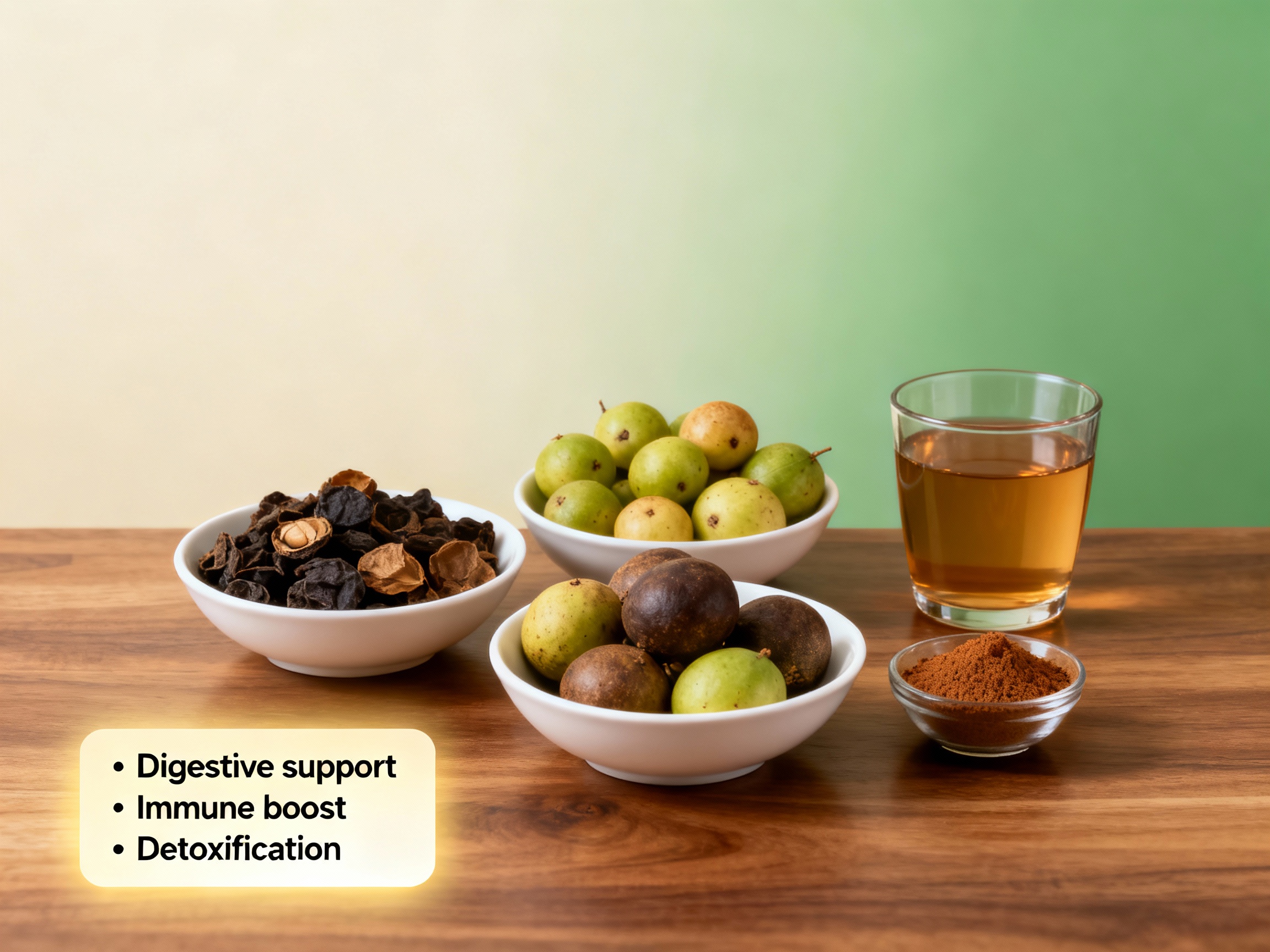

Triphala churna is a classical Ayurvedic formulation consisting of the powdered fruits of Amalaki (Emblica officinalis), Haritaki (Terminalia chebula), and Bibhitaki (Terminalia bellirica), and is traditionally revered as both a gentle laxative and a broad-spectrum rasayana that supports digestion, detoxification, and systemic rejuvenation. In routine clinical practice, it is widely prescribed for chronic constipation, irregular bowel habits, bloating, flatulence, and sluggish digestion, with practitioners valuing it because it promotes regular, formed stools and improves appetite and agni without causing harsh purgation or dependence when used in appropriate doses over longer periods. Classical descriptions and modern interpretations emphasize its tridosha-balancing nature, with a particular capacity to pacify Vata and Pitta in the gut while gently clearing excess Kapha, which explains its indications not only in constipation but also in various dyspeptic and metabolic complaints. Pharmacological and experimental studies attribute to Triphala potent antioxidant, anti-inflammatory, immunomodulatory, antimicrobial, and cytoprotective activities, driven by its rich content of polyphenols, tannins, vitamin C, and other phytochemicals, and these actions have been explored in models of gastrointestinal disorders, cancer, diabetes, neurodegeneration, and inflammatory diseases. Preclinical data suggest that Triphala can scavenge free radicals, enhance endogenous antioxidant defenses, modulate pro- and anti-inflammatory mediators, protect tissues from oxidative and inflammatory injury, and even influence cell proliferation and apoptosis pathways, supporting its traditional classification as a rejuvenative formulation. Human clinical studies, though relatively limited and heterogeneous, provide additional support, with trials and observational work indicating potential benefits in improving bowel regularity, reducing symptoms of functional constipation, enhancing oral and periodontal health, and producing favorable changes in body weight, body mass index, lipid profile, and glycemic parameters in certain populations, especially when combined with lifestyle measures. Meta-analytic assessments further suggest that Triphala may offer modest but clinically relevant improvements in cardiometabolic risk markers, although authors consistently call for larger, better-designed randomized controlled trials to confirm efficacy, clarify optimal dosing regimens, and define specific indications and contraindications. Safety evaluations in animals and humans generally describe Triphala as well tolerated, with high-dose toxicity studies showing a wide margin of safety, yet mild gastrointestinal effects such as cramping, loose stools, or abdominal discomfort can occur, especially with excessive doses, in very lean or Vata-predominant individuals, or when fluid intake is inadequate. From an evidence-informed Ayurvedic perspective, Triphala churna can therefore be regarded as a versatile, multi-target formulation primarily suited for digestive regulation, detoxification support, and long-term maintenance of health, but its use should be individualized according to prakriti, age, comorbidities, and concurrent medications, and integrated judiciously with modern diagnostics and treatment rather than positioned as a stand-alone cure for complex or serious diseases.
Leave a Reply